
Mexico Wine.
Old History, Agave Country and the Price of Water
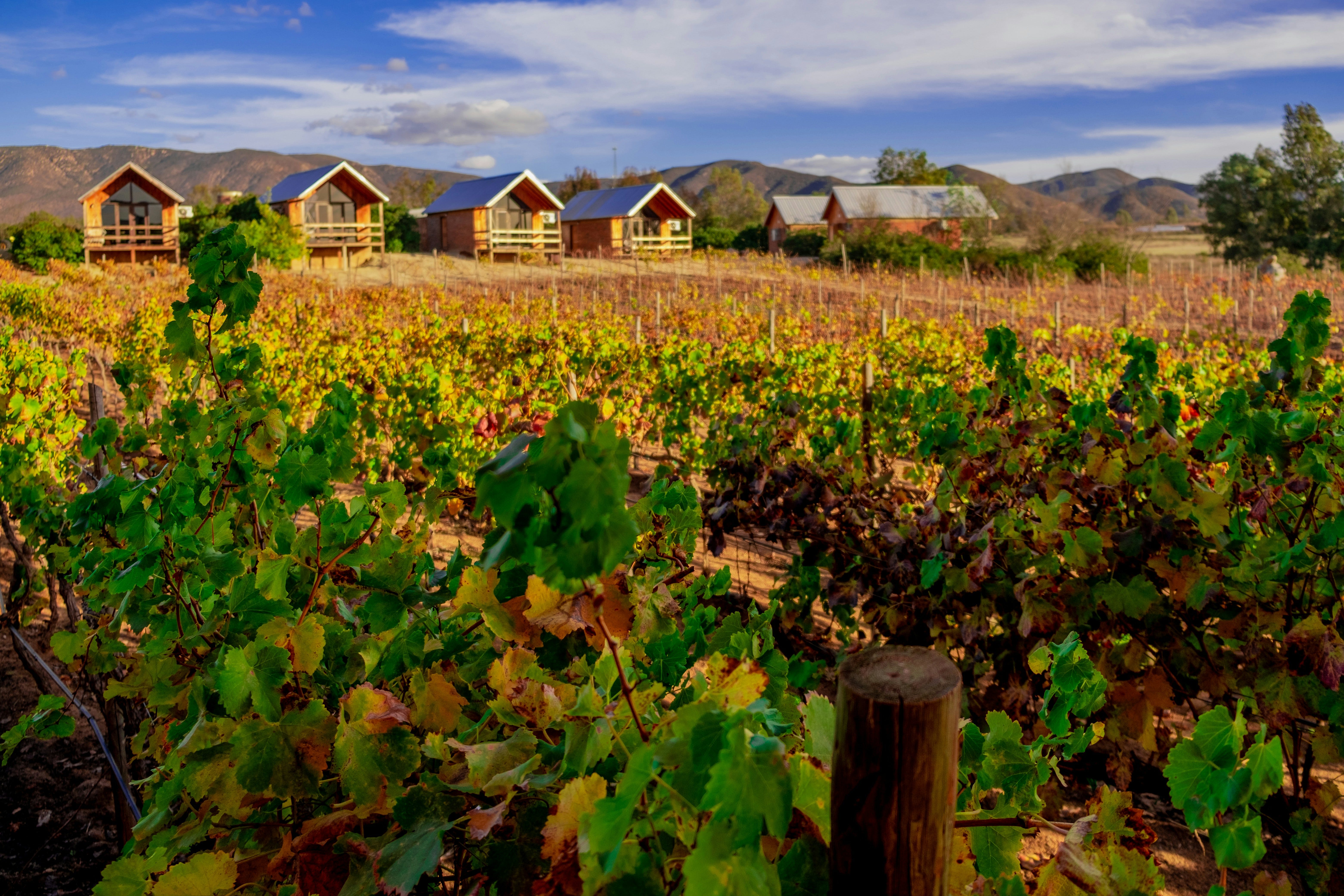
Mexico’s wine history is old enough to be misleading.
Casa Madero traces its foundation to 1597, when Lorenzo García received land and permission to plant vines and make wine and brandy at Hacienda San Lorenzo in the Valle de Parras. It presents itself as the oldest continuously operating winery in the Americas. Its own chronology also records a prohibition on wine production in 1699, followed by repeated changes of ownership and a much later modernisation of the estate.
The date is real. The continuity contains several centuries of changing laws, owners, vineyards and markets. An old licence did not produce an uninterrupted national wine culture.
The modern industry was largely reconstructed during the twentieth century through commercial producers, migration, imported grape material, restaurants and tourism. Colonial history gave Mexican wine a powerful origin story. It did not create the market that exists today.
Mexico has had vines for centuries. Modern Mexican wine is much younger.
The first green shoots
The modern national industry takes shape most clearly in Baja California.
Bodegas Santo Tomás provided the early commercial foundation. Established in the nineteenth century, it later came under the ownership of former Mexican president Abelardo L. Rodríguez, who hired the Italian oenologist Esteban Ferro Binello in the early 1930s. Vineyards were expanded, grape supplies secured and production modernised, all at a time when Baja wine was still largely a bulk and fortified wine business.
Valle de Guadalupe developed through another imported history. Molokan families from the Russian Empire settled there in the early twentieth century, establishing farms and vineyards. Their contribution did not begin viticulture in Baja, but it gave the valley an agricultural base that became important to its later wine economy.
Angelo Cetto arrived from Trentino in 1924 and founded the business that became L.A. Cetto in 1928. The company linked grape growing in Baja with national distribution, eventually becoming one of the country’s largest and most recognisable wine producers.
A further shift came when producers began treating quality and regional identity as primary objectives rather than additions to volume. Monte Xanic, founded in 1987, became one of the clearest symbols of that change. Its first wines reached the market the following year, at a time when imported Spanish, Chilean, Italian and North American wines still dominated Mexican consumers’ expectations.
Smaller estates followed, experimenting with varieties, blends and individual sites. Restaurants and tourism accelerated the transformation. Valle de Guadalupe became not only a place where wine was grown, but a destination organised around wine, food, architecture and landscape.
The old history supplied heritage. The twentieth century supplied vineyards, businesses and consumers.
Agave country
Wine is developing inside a drinks culture whose strongest identities were formed elsewhere.
Agave had been used for food, fibre and fermented drinks for centuries before distillation arrived. The landscape around Tequila combines fields, towns, haciendas and distilleries, linking the modern spirit with at least two thousand years of agave use. UNESCO describes tequila and its landscape as part of Mexican national identity.
Tequila offers one model of protected identity. It is built around blue agave, a defined territory and a tightly recognisable product name. The category is understood almost everywhere, even when differences among individual places, agave sources and production methods remain hidden behind the larger brand.
Mezcal presents a more plural model. Its denomination holds together numerous regions, agave species and production traditions. Labels can carry the agave used, the place of production and a category such as mezcal, artisanal mezcal or ancestral mezcal. The consumer is asked to learn a wider vocabulary of plants, origins and methods.
The distinction should not be reduced to industrial tequila against artisanal mezcal. Small traditional tequila producers exist, while mezcal has attracted large businesses, international investment and celebrity brands. Tequila achieved unusual clarity through relative standardisation. Mezcal protects diversity, although that diversity requires more explanation.
For wine drinkers accustomed to heavily regulated European markets, the relevance is immediate. Mexico already understands protected names, delimited production, raw material rules and the commercial power of origin. Its wine industry is not importing those concepts into an empty culture.
Agave also has cultural depth beyond regulation. Tequila can be inexpensive, celebratory and quickly consumed, but also slowly sipped, regionally specific or sold as international luxury. Mezcal has moved from strongly local associations into fashionable urban bars and export markets while retaining a greater expectation of place, producer and plant.
Wine occupies a different position. It is closely associated with restaurants, travel, regional gastronomy and an audience willing to explore unfamiliar domestic products. For some drinkers, Mexican wine is aspirational. For others, it is a form of national discovery alongside the Spanish, Chilean, Argentine and French bottles that shaped much of the modern market.
These drinks do not compete for one fixed place in Mexican culture. A meal can begin with mezcal, continue with wine and end with tequila without suggesting that one has displaced another.
Mexico’s first protected wine geographical indication arrived only in 2025. The country did not suddenly discover the idea of origin. It began applying a familiar language to wine.
Who drinks Mexican wine?
Mexico remains a small wine market relative to its population.
Industry figures for 2025 put domestic production at around 423,000 hectolitres against consumption of more than 1.5 million. Imports reached approximately 820,000 hectolitres, while annual consumption remained around 1.3 litres per person. Only a minority of bottles opened in Mexico are domestically produced.
Imported wines therefore have a central role in defining what Mexican consumers expect wine to taste like and how much it should cost. Spanish, Chilean and French producers benefit from established supply chains, familiar grapes and production at a scale most Mexican estates cannot match.
A 2025 study surveyed 615 Mexican wine consumers. It was not a representative cross section of the country: the respondents were unusually well educated and already engaged with wine. More than half were under forty, over nine in ten had university or postgraduate education, and the average respondent drank wine more than five times a month. National wine scored slightly higher than imported wine in stated preference, while origin and geographical indication were important purchasing considerations.
The bias in the sample is itself revealing. The visible Mexican wine audience remains concentrated among educated and enthusiastic drinkers rather than reflecting an established national habit. These are consumers willing to pay attention to origin, sustainability, production and the idea of Mexican wine as a category.
Restaurants, wine bars and tourism give that audience somewhere to form. Mexican wine is not purely an elite drink, but its clearest growth has occurred through urban gastronomy, regional travel and consumers with enough disposable income to experiment.
National identity may open the first bottle. The wine has to justify the second.
One country, several wine solutions
Mexico’s vineyard statistics require careful reading.
The country has close to 40,000 hectares of vines, but most are used for table grapes and raisins. The category of industrial grapes also includes wine, brandy, juice and concentrates. Wine activity now exists across seventeen states, but they are not equivalent regions and their agricultural figures do not necessarily describe bottled wine.
Baja California remains the centre, producing around three quarters of Mexican wine. Coahuila offers the strongest historical continuity and a growing high altitude sector. Querétaro has built its identity around elevation, sparkling wine and the country’s first protected wine geographical indication. Guanajuato, Aguascalientes, Zacatecas, Chihuahua and other states are widening the map.
These regions are not different stages of one development. They are separate responses to making wine across an enormous country.
Baja California: desert beside the Pacific
Valle de Guadalupe has become shorthand for Mexican wine. That shorthand is commercially useful and geographically misleading.
Baja’s wine country contains a group of valleys with different relationships to the Pacific, elevation, soils and water. Guadalupe, Santo Tomás, San Vicente, Ojos Negros, La Grulla and the other valleys should not be treated as versions of one site.
Marine air moderates parts of northern Baja as it moves inland across the coastal ranges. The influence weakens with distance, while elevation creates further variation. Soils include sand, granite, clay, gravel and areas of limestone. Water availability can change over surprisingly short distances.
Producers have responded with an unusually broad range of varieties: Cabernet Sauvignon, Merlot, Tempranillo, Zinfandel, Syrah, Grenache, Mourvèdre, Nebbiolo, Chenin Blanc, Chardonnay, Sauvignon Blanc and many others.
Baja’s producer history explains some of that freedom.
Santo Tomás gives the region its historic commercial foundation. L.A. Cetto gives it scale and national reach. Monte Xanic represents the modern quality turn. Casa de Piedra became associated with small production and serious sparkling wine, while Mogor Badan and Adobe Guadalupe helped connect vineyards with food, accommodation and the emerging culture of the valley.
Later projects widened the range further, from Mediterranean influenced blends to natural wine, architectural tasting rooms and restaurants whose reputation sometimes travelled further than the bottles.
The absence of a mature appellation system allowed experimentation to flourish. Producers could plant what they wanted, blend freely and alter their choices as they learned more about individual sites.
Cabernet Sauvignon brings recognition and can produce substantial wines, although warmth and oak can easily turn ambition into heaviness. Syrah, Grenache and Mourvèdre often make climatic sense. Tempranillo has an obvious affinity with warm, dry conditions without automatically creating a Mexican identity.
Chenin Blanc may have a stronger regional claim than its international prestige suggests. It has a meaningful history in Baja, can retain acidity and works across several styles. Mediterranean white varieties provide another route towards freshness.
Blends may ultimately tell the regional story better than single varieties. They allow producers to respond to warm vintages, water stress and the uneven performance of varieties whose suitability is still being tested.
For now, producer identity remains stronger than valley identity. Valle de Guadalupe tells the buyer where the grapes came from, but not yet what the wine is likely to taste like.
When the destination threatens the vineyard
Valle de Guadalupe has become much more than an agricultural district.
Wineries, restaurants, hotels, tasting rooms, architecture and events have turned it into Mexico’s leading wine destination. The combination of wine, Baja seafood, live fire cooking and dry landscape is commercially powerful.
Tourism gives small producers direct access to consumers and allows an expensive domestic bottle to be sold with enough context to justify its price. The visit makes the vineyard, food and landscape part of the wine.
The danger is that the destination can begin to consume the agriculture that created it.
Construction has expanded, land values have risen and hospitality projects compete with vineyards and other farming. Development has often moved faster than planning and infrastructure.
Water is the harder limit. The Guadalupe Valley basin depends heavily on groundwater and faces severe depletion caused by intensive extraction and declining precipitation. A recent peer reviewed study cites an annual deficit of approximately 18 million cubic metres, reported in 2024. Around 60 per cent of groundwater abstraction was attributed to agriculture and 35 per cent to urban demand.
Vineyards are water users. Restaurants, hotels, housing and other agriculture add further demand. The problem cannot be reduced to farmers against developers, but the current trajectory requires a credible settlement over extraction, recharge, treated water and land use.
More efficient irrigation can help. Managed aquifer recharge and treated water may also form part of the response. None creates an unlimited supply.
Valle de Guadalupe built its reputation around scarcity: dry hills, small estates and the feeling of discovering a region still forming. If the vineyards lose access to usable water, hospitality will be left selling the memory of one.
Baja’s Nebbiolo paradox
Baja Nebbiolo is often presented as a strange transplant from Piedmont. The route is more complicated than a single Italian grape arriving in a single shipment.
The first important figure is Esteban Ferro Binello, an Italian oenologist who took charge of Bodegas Santo Tomás in 1933. The archival record establishes his role in expanding vineyards and professionalising production. A later account from his son says that Ferro studied the local conditions and imported machinery and several varieties from Piedmont in 1934.
Another long repeated version places the arrival after the Second World War. In that story, a mixed shipment of Piedmontese cuttings was delayed at Veracruz, its labels deteriorated, and the surviving material was planted collectively under the name Nebbiolo. Barbera, Grignolino and Freisa are often named among the varieties involved.
The accounts cannot both be exact. One places the import in 1934; the other moves it into the postwar years and adds the lost labels. The secure part is narrower: Ferro was an Italian professional working at Santo Tomás from the early 1930s, and Piedmontese material entered Baja during the period in which the modern industry was being built.
The second route runs through L.A. Cetto.
Angelo Cetto came from Trentino, not Piedmont. Camillo Magoni came from Morbegno in Valtellina, where Nebbiolo is grown under the local name Chiavennasca. He studied viticulture and oenology in Alba, worked at Nino Negri and joined L.A. Cetto in Baja in 1965. He therefore arrived with direct experience of Nebbiolo and a wider northern Italian grape vocabulary.
Magoni began introducing and testing new varieties from 1967. A separate account from L.A. Cetto’s history places the arrival of another Italian Nebbiolo selection in 1968 under Luis Agustín Cetto. The estate later made the grape central to its premium range, releasing its varietal Nebbiolo in 1986 and promoting it as one of Baja’s most important red wines.
The Piedmont connection was therefore not the result of a large Piedmontese migration to Mexico. It came through imported plant material, Ferro’s work at Santo Tomás, Magoni’s northern Italian experience and L.A. Cetto’s ability to turn the grape name into a commercial category.
That history also explains why the plant material may not be uniform.
Many Baja wines labelled Nebbiolo are dark, full bodied and rich in black fruit, unlike the relatively pale colour and aromatic profile expected from Piedmontese Nebbiolo. Climate, yields and winemaking can account for some of that difference. Genetics may account for more.
Some tested material has reportedly been identified as Lambrusca di Alessandria, an old Piedmontese variety associated with the province of Alessandria. It is genetically distinct from Nebbiolo and also far removed from the better known Lambrusco grapes of Emilia Romagna. Genuine certified Nebbiolo is also planted in Baja.
In 2026, grape geneticist José Vouillamoz discussed one Baja sample that appeared potentially to be Lambrusca di Alessandria. He stressed that one sample from one vineyard could not establish the identity of plantings across the region and that proper DNA profiles would be needed before reaching a conclusion.
There may therefore be at least two stories under the same label: older material inherited from the Ferro and early Cetto period, and later certified Nebbiolo plantings with a more recognisable varietal character.
A systematic testing programme could identify the old blocks and separate genuine Nebbiolo from Lambrusca di Alessandria or any other material carried under the same name. It would not erase the local history. It would make it more interesting.
Mexican Nebbiolo may turn out to be less a transplanted Barolo grape than a Baja category formed from Italian vines, uncertain labels, local conditions and forty years of successful marketing.
Coahuila: wine sustained by an oasis
Parras de la Fuente prevents Mexican wine history from becoming a purely Baja story.
It sits at the foot of the Sierra Madre Oriental, a fertile pocket inside a much drier landscape. Springs and groundwater made agriculture possible. Casa Madero describes its vineyards as an oasis between mountains, shaped by dry conditions, warm days and cold nights.
The oasis is the essential point. Wine did not survive because a document was issued in 1597. It survived because water, settlement and demand gave the vine a practical reason to remain.
Casa Madero carries an enormous historical burden, but age alone cannot sustain a modern winery. Its vineyards, technical investment and wines have to justify the continuity in the bottle.
Newer estates including Rivero González, Don Leo, Parvada and Bodegas del Viento have created a modern regional conversation beyond the founding property. The grape choices remain broad: Syrah, Cabernet Sauvignon, Cabernet Franc, Malbec, Chardonnay, Sauvignon Blanc, Verdejo and less predictable varieties such as Caladoc.
Coahuila’s emerging identity rests on desert viticulture made possible by water and elevation, expressed through a still varied group of producers.
The history brings visitors. The wine determines whether they return.
Querétaro: altitude, bubbles and the first wine GI
Querétaro lies between 20 and 21 degrees north, far below the latitude normally associated with established wine regions. Its vineyards rely on elevation rather than distance from the equator.
The geographical indication recognised in March 2025 describes an average elevation of about 1,965 metres, summer rainfall, hail risk, substantial night cooling and mainly clay based soils. Eight municipalities were producing wine across approximately 550 hectares, with another four identified as suitable. It was Mexico’s first protected wine geographical indication.
Altitude preserves acidity and moderates night temperatures, but it does not solve every problem. Intense sunlight, summer rain and hail create a different set of risks. Producers may be waiting for flavour development while wet weather threatens the health of the fruit.
Sparkling wine provides Querétaro’s clearest regional argument. Grapes can be picked before the full ripeness required for ambitious red wine, while acidity and moderate potential alcohol become useful.
Freixenet’s Finca Sala Vivé helped establish production at scale. La Redonda, Cava 57 and smaller producers have widened the category through traditional method and other sparkling wines. Still wines from Tempranillo, Syrah, Chardonnay and Bordeaux varieties add breadth, but bubbles currently offer the most coherent regional form.
The geographical indication is historically important and broad. It protects wine from a substantial part of the state rather than defining a narrow zone, limited grape mix or single style.
Its recognition ahead of Baja should not be read as a quality ranking. It may reflect stronger regional organisation and a greater willingness to build a shared institutional identity. Baja developed through producer brands and tourism without first formalising a common regional structure.
Querétaro has begun giving Mexican wine a legal map. The detail will follow through the wines.
Beyond the three centres
Mexico’s wine geography is becoming more plural.
Guanajuato is the clearest candidate to join the three established centres. Vineyards around San Miguel de Allende, Dolores Hidalgo and other parts of the state combine altitude, tourism and a strong historical narrative. Cuna de Tierra helped establish a modern premium identity, while newer projects have expanded the regional route.
Aguascalientes and Zacatecas possess substantial grape growing sectors, although industrial statistics include fruit destined for brandy, juice and concentrates as well as wine. Chihuahua, San Luis Potosí, Nuevo León and other states have newer vineyards using altitude and dry continental conditions to create their own arguments.
A vineyard state does not automatically become a coherent wine region. A strong producer can emerge before there is enough repeated evidence to define a regional style.
The widening map still matters. It reduces the risk of Mexican wine becoming synonymous with one tourism valley and one set of climatic problems.
A sensible route in
For Baja California, probably not a good idea to treat Valle de Guadalupe as the whole region or Cabernet Sauvignon as the automatic starting point. Begin with Chenin Blanc or another dry white, then move through a Mediterranean influenced blend and a more structured red. Try a wine labelled Nebbiolo, but ask whether it comes from old Baja material or certified plantings. Compare Guadalupe with Santo Tomás, San Vicente or Ojos Negros wherever possible.
For Coahuila, start with Casa Madero because the history deserves to be encountered directly. Follow it with a newer producer such as Rivero González, Don Leo, Parvada or Bodegas del Viento.
For Querétaro, begin with sparkling wine. Traditional method examples offer the clearest account of what altitude and earlier picking can achieve. Then move to still whites and reds to see whether individual sites are beginning to separate themselves from the broad regional category.
For Guanajuato, use the wine route rather than looking for a defining grape. Compare producers around San Miguel de Allende and Dolores Hidalgo and ask whether altitude, tourism and regional organisation are producing a coherent fourth centre.
Tequila and mezcal belong beside this exploration, not in competition with it. Read their labels for place, agave and production category. They show how much information a Mexican drink can carry when raw material and origin become part of its identity.
Mexico has had vines for centuries. It is only now deciding what Mexican wine means.